Decker Boston Knob and Tube arranges fuse box to breaker panel upgrades and service upgrades for older homes across Boston, Cambridge, Somerville and nearby cities, done by licensed and insured electricians as part of knob and tube work. The panel usually comes up because a rewire needs it: every new circuit needs an arc-fault breaker and a space to put it in.
A new panel does not remove knob and tube, though. It changes the equipment protecting the circuits and leaves the wire in the walls as it was, which is why the panel is treated here as one decision inside a whole house rewire or partial replacement, not a substitute for one.
What happens on the first visit
The first visit asks two questions: is the existing panel or fuse box fit to keep, and is the service big enough for the house as it will be used. They have different answers more often than owners expect.
The panel inspection
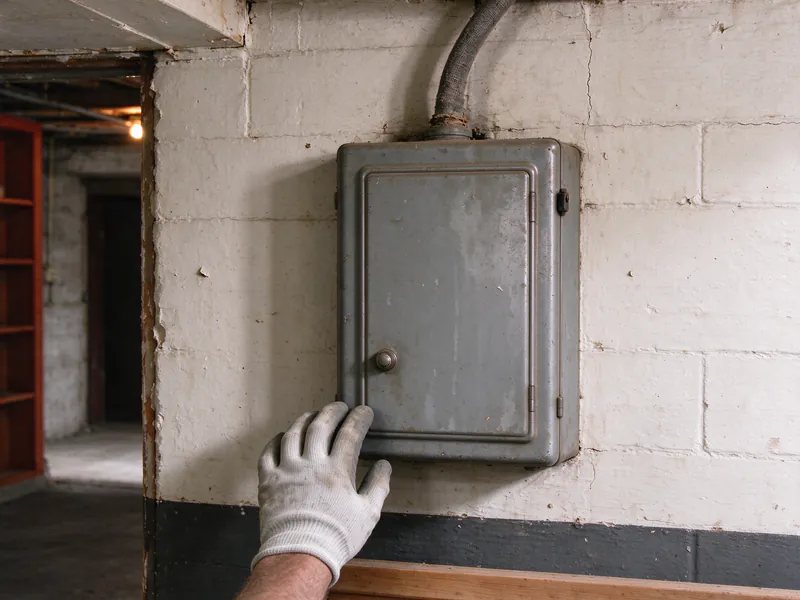
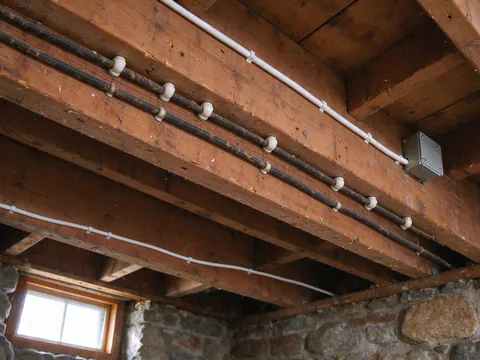
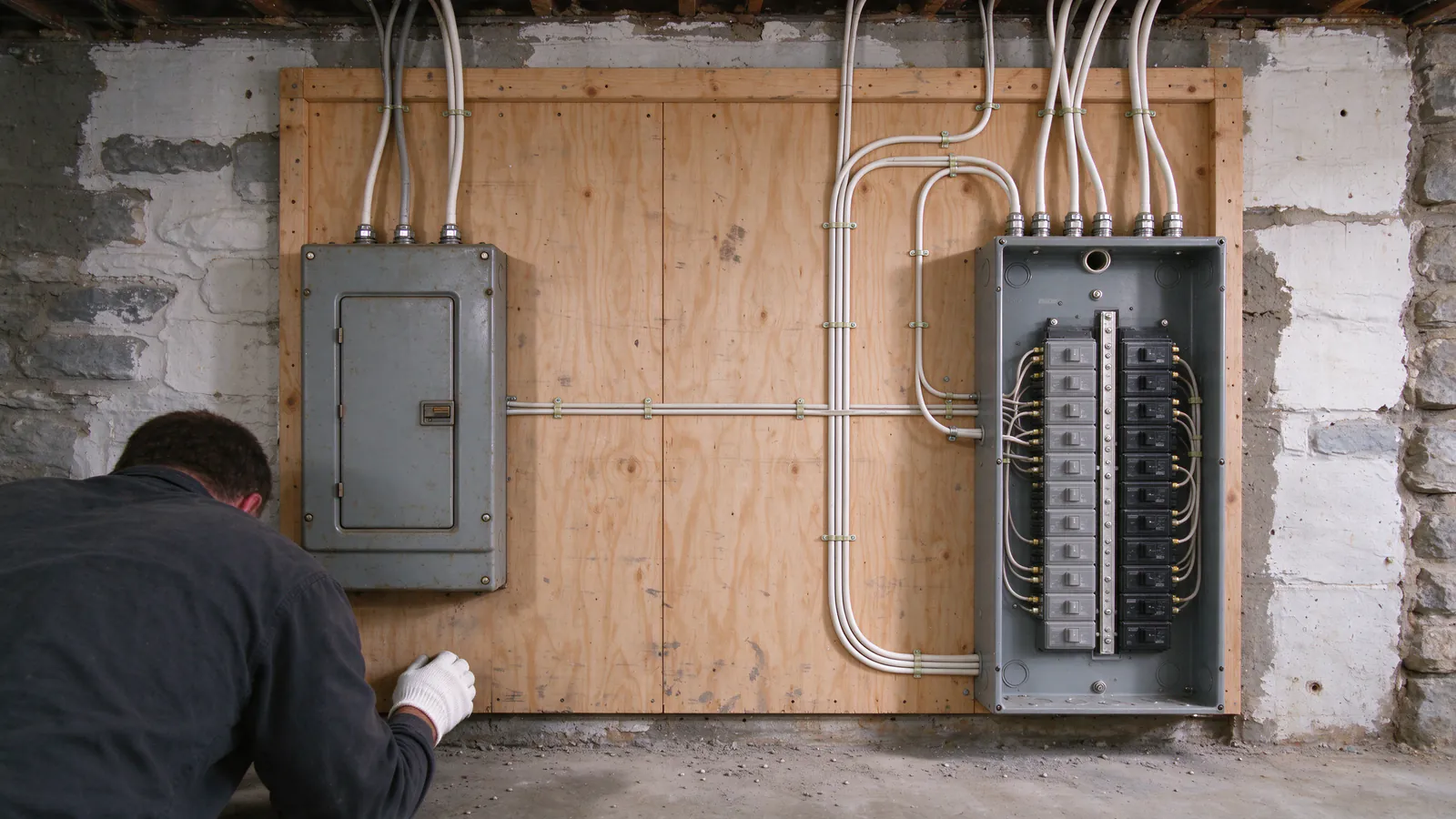
The electrician opens the fuse box or panel and checks what is in it. That means signs of heat at fuse sockets and terminals, corrosion, fuses or breakers larger than the wire they protect, more than one wire under a terminal made for one, and how many spaces are left. The circuits leaving the panel are traced far enough to say which are knob and tube, cloth-sheathed cable or later cable. The knob and tube inspection covers the circuit tracing in more depth.
The load calculation
Then comes a load calculation: the house’s lighting and outlet load, the kitchen and laundry, heating and cooling, water heating and anything planned, such as a heat pump or EV charger, worked through the code’s method for dwellings. The result is a service size the house needs, which can be smaller than owners assume. A calculation that fits the existing service means a panel swap may do; one that doesn’t means a service upgrade and the utility.
What you get back
You get a written recommendation: keep, replace or add a sub-panel, and whether the service changes. It sits in the same scope as the circuit work, so the panel’s spaces match the circuits being added and nobody buys a panel twice.
Why knob and tube jobs so often reach the panel
A rewire can outgrow an old panel in three different ways, and any one of them is enough.
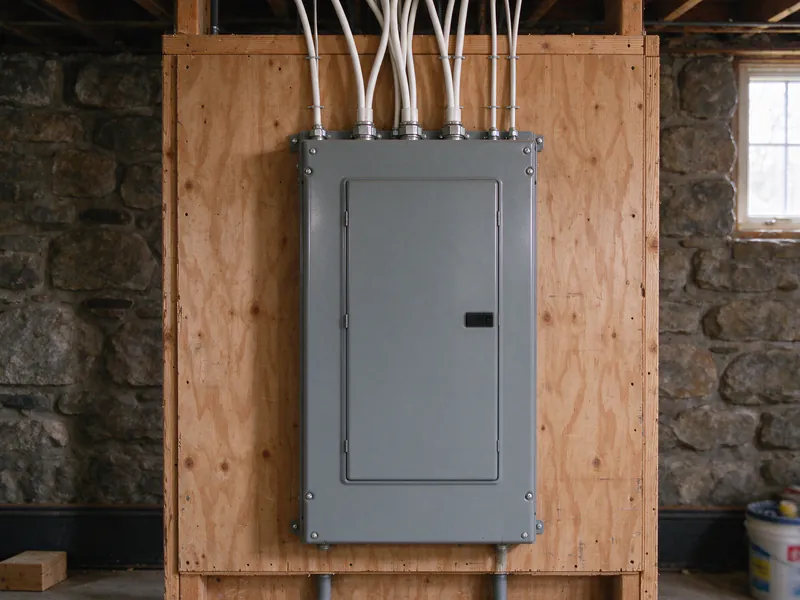
Arc-fault breakers need spaces
Massachusetts goes further than the base code on arc-fault protection. Its version of 210.12(B) covers every 120 volt, 10, 15 and 20 amp branch circuit supplying outlets or devices in a dwelling unit, not a list of rooms. Each new circuit from a rewire needs that protection, which in practice means a breaker panel with room for it. A fuse box offers neither the breakers nor the spaces. When an existing circuit is modified, replaced or extended, the NEC’s own arc-fault provision applies, and Massachusetts leaves it as written.
Overfusing and old protection
Fuses were made to match the wire, but a screw-in fuse of any size fits most old sockets. Where a knob and tube circuit kept blowing its fuse, a larger fuse let the circuit run hotter than the wire is rated for, without anything opening. The panel inspection compares every fuse or breaker with the wire it protects. Overfusing found there is a reason to treat the circuit itself as suspect, not only the fuse. The guide to how many amps knob and tube can handle explains the limits of those old conductors.
More circuits than the old layout had
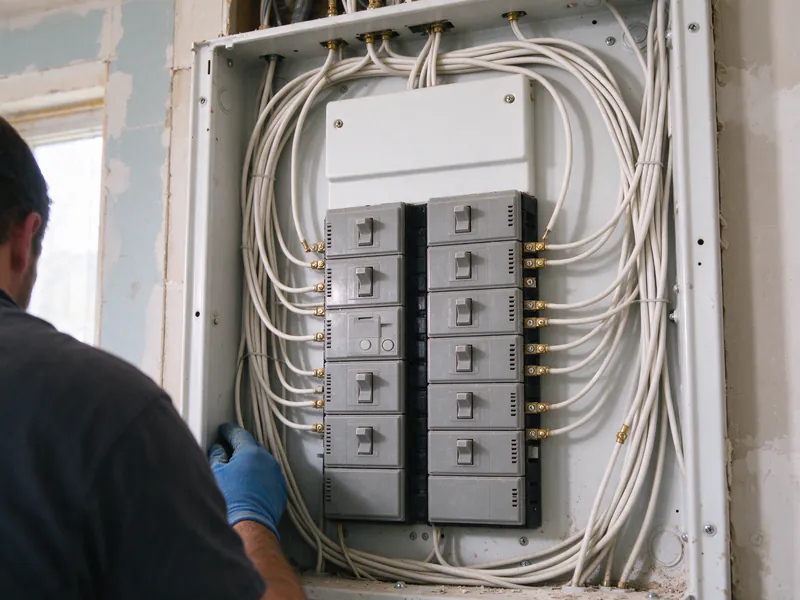
A rewire usually adds circuits: separate kitchen, bath and laundry circuits, split bedroom circuits and outlets where cords used to run. The panel has to hold all of them, and the service has to carry their combined load. Local permit records show the pairing is common. Of the 155 Cambridge electrical permits naming knob and tube, 41 also mention a service or panel; in Somerville it is 35 of 181. A 2017 Brighton permit reads simply “rewire knob and tube install 60 amp panel.”
What a new panel doesn’t do
Changing the panel removes no knob and tube, and the Massachusetts code does not make it. Rule 3 of 527 CMR 12.00 lets an installation be modified without bringing the rest of it into compliance, and the state’s interpretation committee has said a service can be replaced while knob and tube circuits stay in place. That is useful when the budget forces a choice, but it means a new panel alone won’t answer an insurer’s or Mass Save’s question about old wiring.
The guide on whether a panel upgrade removes knob and tube covers that question in full.
When the service itself changes
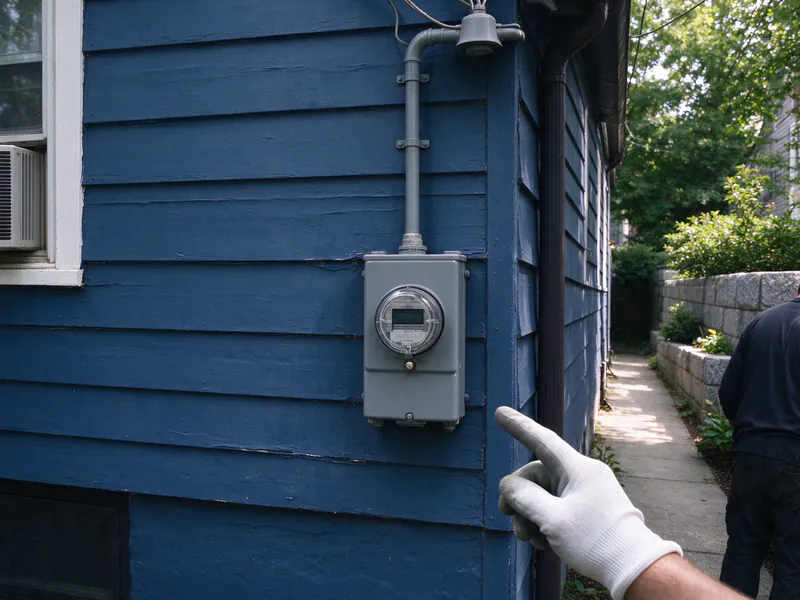
A service upgrade replaces the meter socket, the service-entrance conductors and the main panel, and it brings in the utility.
Eversource, National Grid and Belmont Light
In Boston, Cambridge, Somerville, Brookline and Newton the utility is Eversource, which handles new and upgraded services through a work request and expects the municipal wiring inspection to be done, with the inspector calling the approval in.
In Medford and Malden it is National Grid, where the licensed electrician confirms the upgrade and the customer submits an electric service request form. National Grid lists simple connections at no charge and infrastructure changes as possible extra cost. Belmont is served by the town’s own light department, Belmont Light, which has its own process.
The outdoor disconnect rule
The NEC’s outdoor emergency disconnect rule is narrowed in Massachusetts. It reaches one- and two-family dwellings, new buildings of double occupancy and two-family units newly created from a one-family, and it does not apply when only the meter socket, service-entrance conductors, main breaker or related raceways are replaced. On most existing houses getting a new service, that exception is what governs, and the inspector confirms it per address.
Historic districts and visible equipment
A new mast, meter or service entry is exterior work. In the Back Bay Architectural District, the commission’s guidelines say no electrical equipment goes on primary elevations, attachments are made between the first and second stories on the rear, wiring and equipment should be black and connections to individual units are made inside the building. Similar review applies to visible exterior work in other Boston districts, so the design review goes on the schedule before the utility request.
Panel, service or both?
Start with the load calculation and a look at what the old fuse box is protecting.
Permit, price and paperwork
The permit is a small share of the cost; the service work and the circuits moved over make up most of it.
The permit
In Boston, Inspectional Services charges a $20 application fee plus $0.25 per amp for a new or upgraded service up to 240 volts. A 200 amp service therefore carries a $70 fee and a 100 amp service $45. Work that doesn’t change the service is charged at $1 per fixture, plug or outlet plus $5 per meter. Only a licensed contractor may apply, and work may not begin before the permit is issued. The Boston permit guide covers the other cities.
The price
Upgrading a fuse box to a 200 amp breaker panel together with the service work falls in a typical Massachusetts range of $3,000 to $6,500; a panel-only swap costs less and utility charges are extra. Labor is a part of it: electricians in the Boston metro earn a median $38.42 an hour against $30.38 nationally, according to the Bureau of Labor Statistics. A wage is not a billing rate, which also covers insurance, licensing, vehicles and overhead.
The panel upgrade cost guide breaks the range down, and the cost estimator shows how a service change moves a rewire budget.
The paperwork
When the job is done you should hold the closed permit, a labeled panel schedule and, where the utility was involved, confirmation that the new service was energized after the inspector’s approval. In a multi-family building, each unit’s panel gets its own schedule, which the triple-decker rewiring page covers.