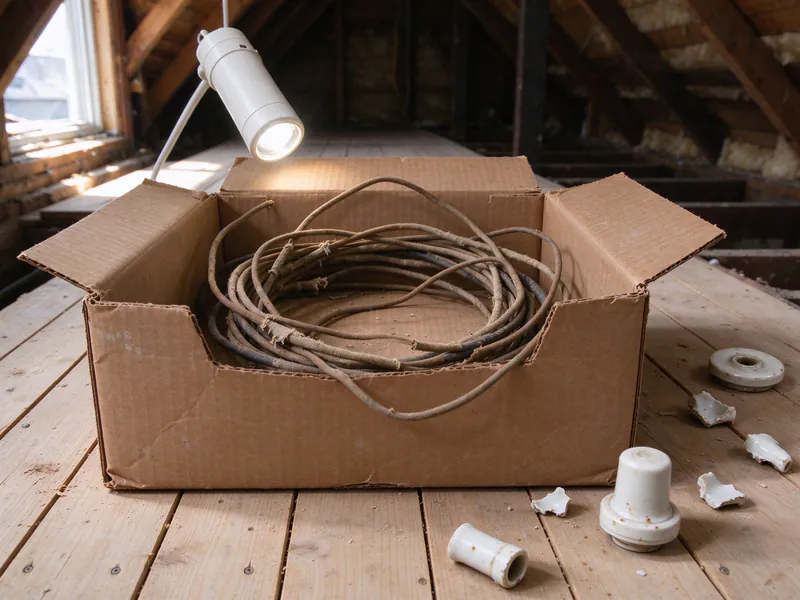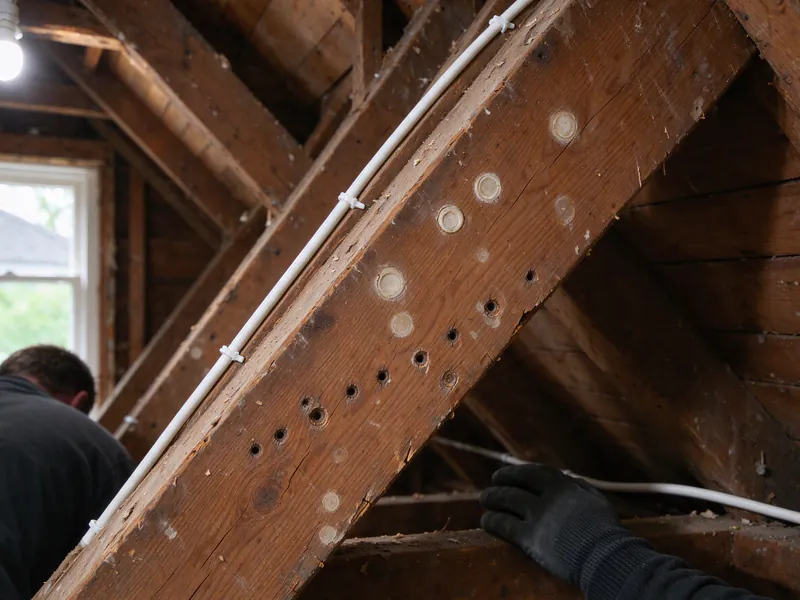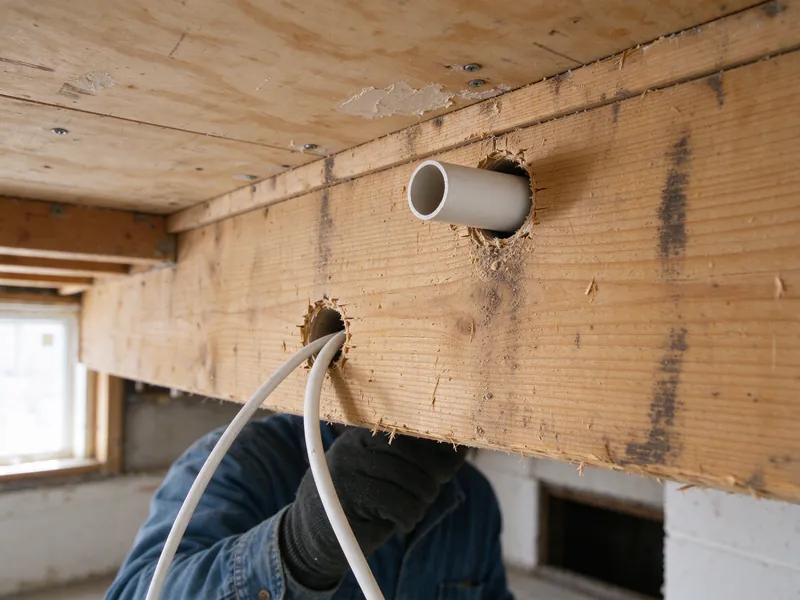
Decker Boston Knob and Tube arranges knob and tube removal across Boston, Cambridge, Somerville and nearby cities, carried out by licensed and insured electricians. Removal means taking the old system out of service for good: every knob and tube circuit disconnected at its source, proven dead, and pulled out wherever it can be reached.
It is a different job from rewiring, although the two usually travel together. If a knob and tube circuit still powers a bedroom, removing it means giving that bedroom a new circuit first. If a run is already dead, removal can be the whole scope.
What happens on the first visit
Removal can’t be scoped until someone knows which runs are active. The visit starts at the panel, traces every circuit, and then follows the old runs through the attic and basement to see where they go and how they can be reached.
Sorting active from abandoned
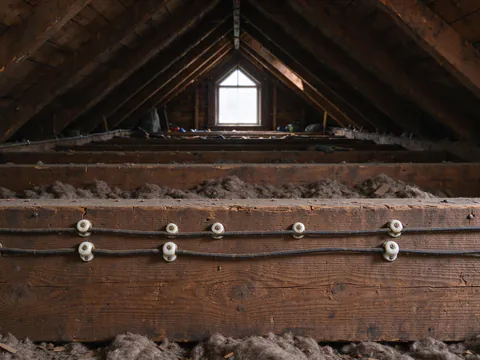
An active run is connected to a fuse or breaker, or spliced into a newer circuit, and carries power to something. An abandoned run was cut off at some point and feeds nothing, though it may still sit on its knobs looking exactly like the live one beside it. Many houses hold both, and the trace is how they get told apart. The knob and tube inspection page describes the tracing, and the guide to telling whether knob and tube is live explains why appearance proves nothing.
What the scope records
The written scope gives every old run a decision: replaced and removed, disconnected and left inside a closed wall, or already dead and pulled out. It lists any new circuits that take over loads, any openings, and a separate line for patching, so the price for taking wire out is never mixed up with the price for closing walls.
Disconnection comes before removal
Cutting old wire out of an attic is the final step. A run is safe to handle only once it has been disconnected at every point that could feed it, and then tested to prove it.
Isolating the circuit
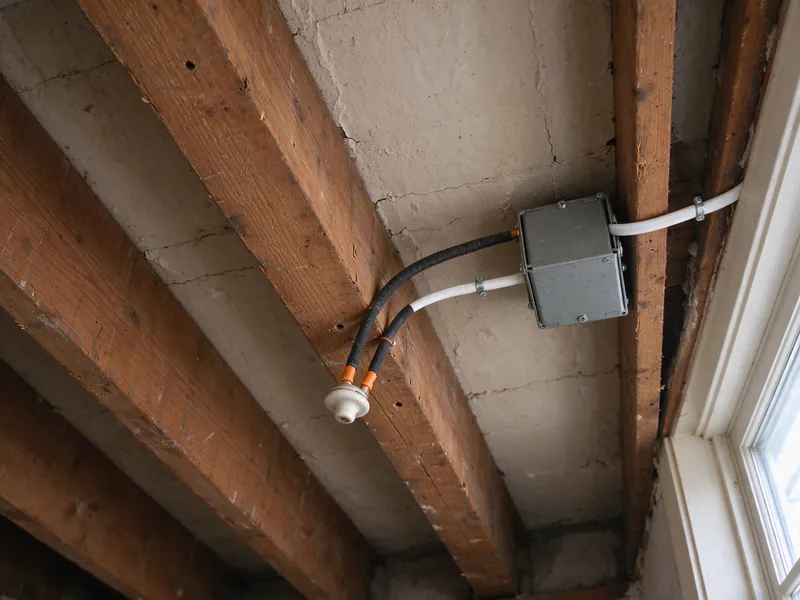
Pulling a fuse or switching off a breaker cuts power from the panel, but knob and tube circuits were often extended, tapped and spliced over the decades. A run that is off at the panel can still be energized from a splice in a ceiling box that joins it to a newer circuit. So isolation means disconnecting the old conductors at the panel and at every junction with newer wiring the trace has found.
Proving it dead
After isolation, the conductors are tested at the far end, away from where they were cut, to confirm nothing still reaches them. Only then are they removed or capped. The result goes into a labeled panel schedule, and once the last circuit is retired, into a written summary stating that no knob and tube remains in service.
Abandon in place or pull it out
Once a run is proven dead, the remaining question is whether it comes out or stays behind the plaster. Both are accepted practice. The right answer depends on where the run is and who will look at that space next.
| Where the run is | Usual approach | Why |
|---|---|---|
| Unfinished attic floor or rafters | Removed with its knobs, tubes and loom | Clears the bays for insulation, and leftover wire there reads as live to the next person |
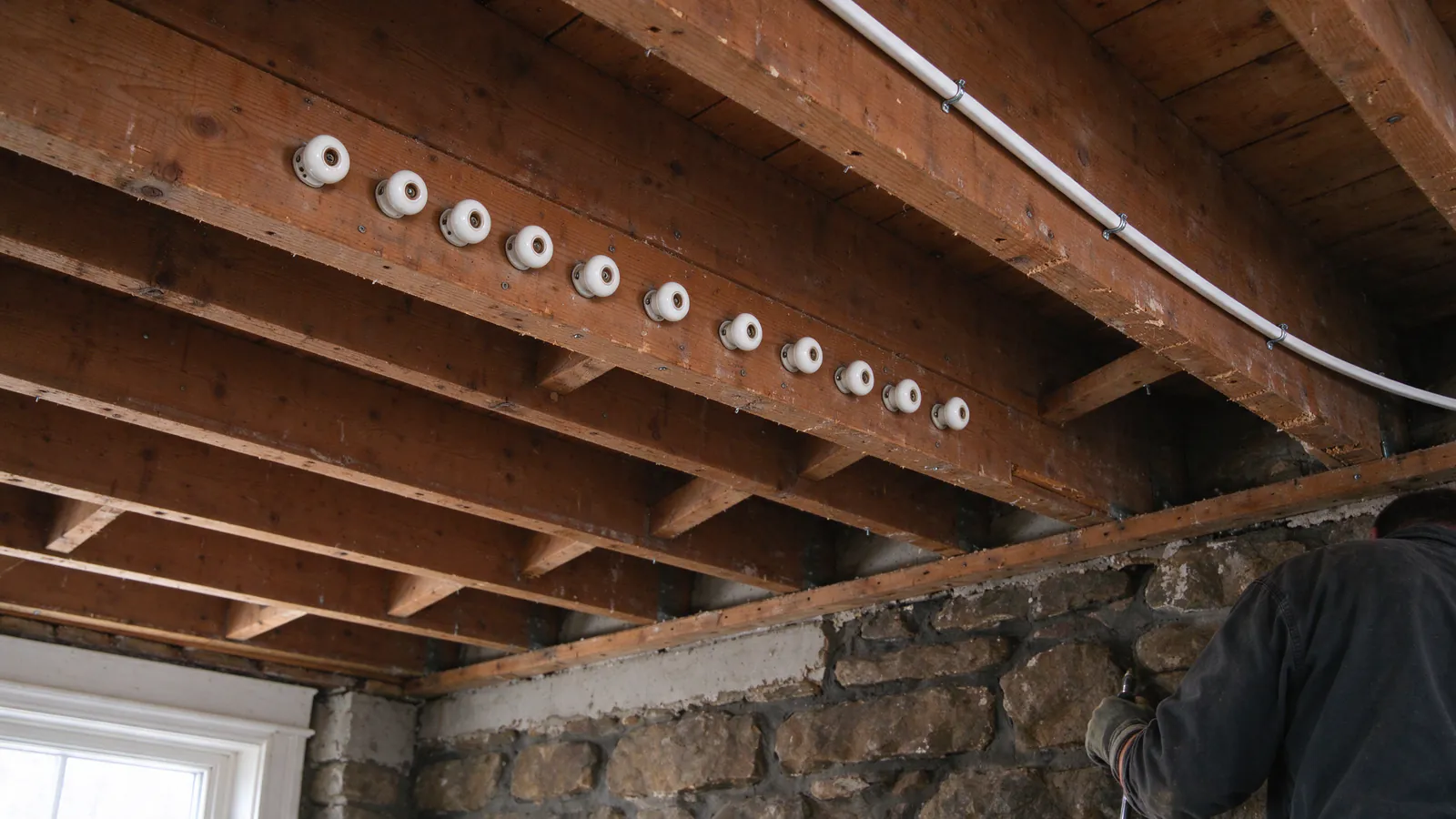
| Open basement ceiling | Removed | It is the first place a buyer’s home inspector looks |
| Reachable crawl spaces | Removed | Same reasoning as the basement, where access allows |
| Inside finished plaster walls and ceilings | Disconnected at both ends, capped and left | Pulling it out means cutting finished plaster to remove wire that is already harmless |
| Walls already open for a remodel | Removed while the bays are open | The access has already been paid for |
Why leftover wire still matters
A home inspector who sees porcelain knobs on a basement joist writes “knob and tube observed,” whether the wire is dead or not. Removing the exposed runs and keeping the written summary avoids reopening the question at every sale or renewal. The selling guide covers what buyers ask.
Removal before insulation
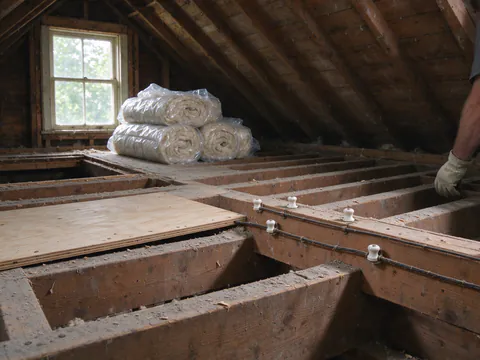
A stalled insulation project is one of the clearest reasons to remove knob and tube in Greater Boston. Mass Save’s assessment standards hold back insulation wherever knob and tube is found until a licensed electrician certifies the work areas are free of active wiring, and City of Boston guidance says insulation can go ahead once the system is inactive.
What the permit records show
Permit descriptions in nearby cities show the pattern. A handful of Cambridge knob and tube permits tie the work directly to insulation, one of them reading “Remove knob and tube so customer can insulate.” Somerville records include second-floor knob and tube eliminated for insulation and old wires removed from an attic crawl space. The Cambridge and Somerville pages cover those cities’ permit offices, and the insulation barrier service covers the certification itself.
What else comes out with the wire
Old wiring sits among old materials, and pulling it out of an attic or a basement ceiling disturbs whatever surrounds it.
Attic fill and old insulation
Knob and tube conductors carry rubber and cloth insulation, but whether anything in a given house contains asbestos is a question for testing, not for a look. Vermiculite attic fill raises its own question, and it is the other barrier Mass Save’s incentive can help pay to deal with. In a house built before 1978, opening painted surfaces to reach a run also brings in the state’s lead-safe rules. The asbestos and lead paint guide explains each.
The fuse box
When the last knob and tube circuit on an old fuse panel is retired, the panel is often the next question, since the new circuits need breaker spaces with arc-fault protection. The panel upgrade page covers that decision.
Insurance, sale and paying for removal
What an insurer or a buyer actually reads is the paperwork: a closed permit with its final inspection, the labeled panel schedule and the written summary of what was removed and what was abandoned.
Insurers and buyers
Homeowners report carriers asking whether knob and tube is “removed” or merely “not in use,” and the two answers aren’t always treated alike. Ask the carrier which it needs, in writing, before the scope is fixed. A finished removal answers the question; no one can promise the carrier’s decision.
What moves the price
Removal has no single figure because its size varies so much. The drivers are how many runs are still live, whether new circuits must replace them, attic and basement access, insulation already covering the runs, and any openings and patching. When removal is part of replacing the active circuits in a whole house, a typical Boston-area budgeting range is $8,000 to $25,000 or more. Moderate-income households whose insulation is blocked may qualify for Mass Save’s barrier incentive of up to $7,000; the grants guide covers eligibility and the Boston cost guide breaks down the rest.