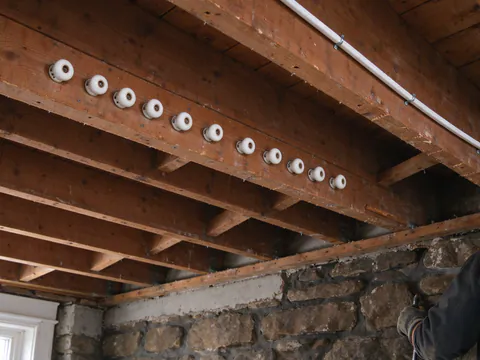
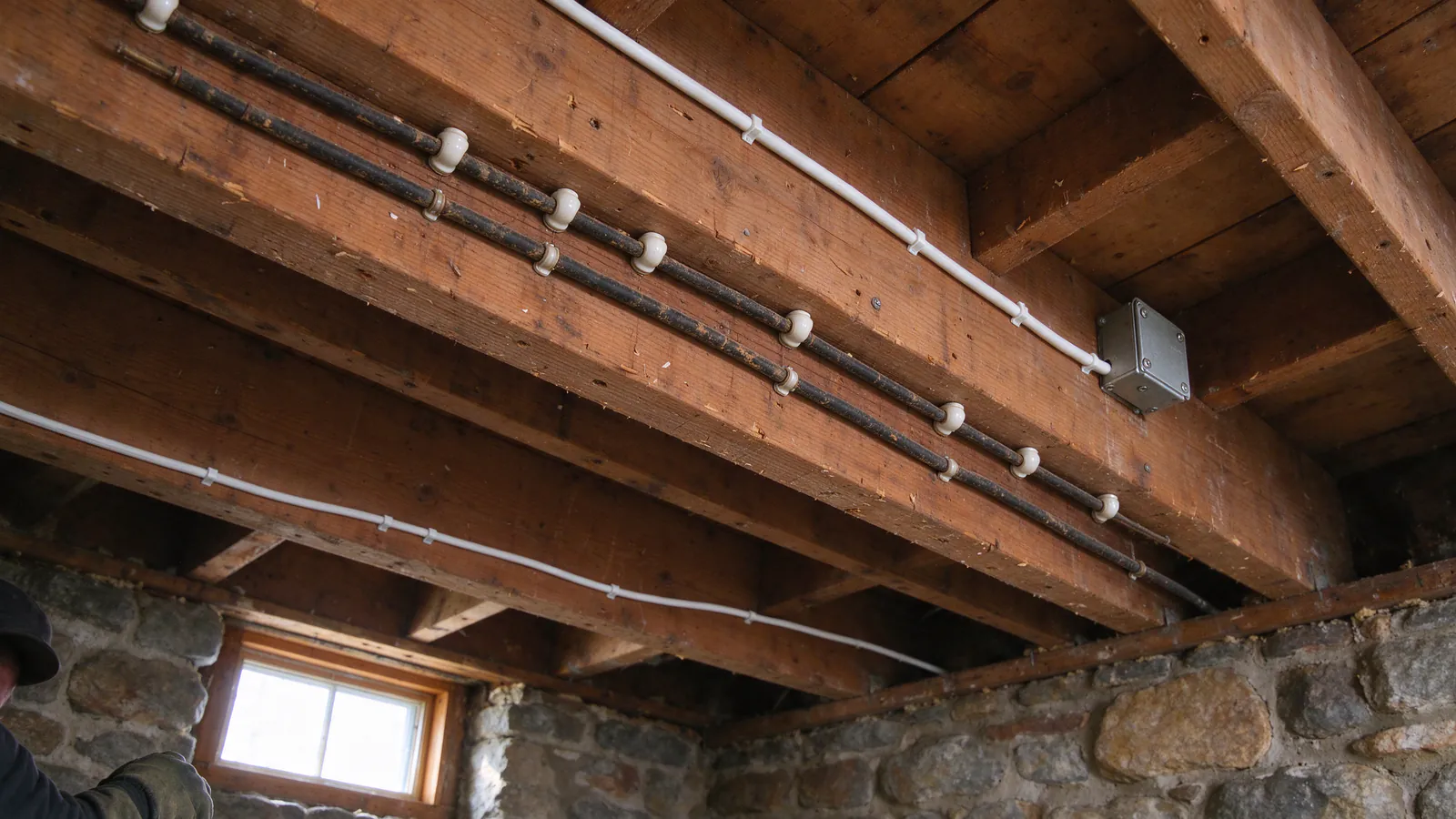
Looking at knob and tube won’t tell you whether it carries power, and probing it yourself is unsafe. A licensed electrician settles it by mapping circuits from the panel, measuring at accessible points and following each run to every place it connects, including splices to newer cable. Wiring counts as abandoned only when it is disconnected at every source. Decker Boston Knob and Tube arranges that verification, and knob and tube removal where it’s needed, through licensed and insured electricians in Boston and nearby cities.
The answer matters well beyond curiosity. It decides what an insurer hears, whether Mass Save can insulate, and whether a job is a quick disconnect or a rewire.
Why looks mislead
Old wiring that seems abandoned often isn’t, and wiring that seems live sometimes is long dead. Several situations create the confusion.
- Cut at one end only. Someone disconnected a run at the fuse panel years ago, but the far end still joins a circuit that is fed from elsewhere.
- Re-fed through a splice. A renovation tied newer cable into an old run, so the old conductors carry power from a new source (mixed with newer cable).
- Replaced in one room, not upstream. A modern outlet sits on new cable for its last few feet, with knob and tube between it and the panel.
- Dead runs left in place. An earlier rewire may have left disconnected knob and tube in walls and attics, so the presence of porcelain doesn’t mean power.
The states a run can be in
| State | What it means | What follows |
|---|---|---|
| Live | Carrying power to lights or outlets today | Replacement of those circuits, or a plan to replace them |
| Disconnected at the source only | No feed from the panel, but still joined to other wiring somewhere | Find and break every remaining connection |
| Abandoned | Disconnected at both ends and at every splice, carrying nothing | Document it; remove reachable sections where useful |
| Re-fed | Old conductors carrying power from a newer circuit through a splice | Treat as live; replace the old section |
| Unverified | Concealed where no test point is reachable | Say so in writing; open access or plan around it |
How an electrician proves it
A first visit starts at the panel, traces every circuit and checks the attic and basement routes. Each step narrows what the others leave open.
- Panel review. Which fuses or breakers feed single knob and tube conductors, and which feed newer cable.
- Circuit mapping. Circuits are switched off one at a time to see which lights and outlets go dead, building a room-by-room map.
- Screening. A non-contact tester gives a quick first read along accessible runs. It is a hint, not a result.
- Measurement. A meter at accessible points confirms whether voltage is present between conductors or to ground.
- Tracing. A circuit tracer follows a run through floors and walls to find where it goes and what feeds it.
- Following the ends. Each run is followed to its terminations and splices, because a run is only dead when every connection is broken.
- Recording. Runs get tagged in place and listed in a written report that separates verified areas from inferred ones.
Concealed wiring sets limits. Where a run disappears into closed plaster with no reachable test point, the honest report says the area was inferred from circuit mapping, not seen.
What the answer changes
| Who is asking | Why live or dead matters |
|---|---|
| Your insurer | Homeowners report carriers asking owners to remove knob and tube or show that it isn’t live, sometimes on a short deadline (insurance guide) |
| Mass Save | Before insulation or air sealing that could reach the wiring, a licensed electrician must certify that every recommended work area is clear of active knob and tube |
| The City of Boston | Its weatherization page tells owners that inactive knob and tube doesn’t stop insulation |
| Your budget | Live circuits must be replaced (cost guide); proven-dead runs only need documenting, and removing the reachable sections |
| A future buyer | Records of what was proven dead save the next owner from repeating the work |
Why some electricians hesitate to sign
Homeowners report electricians declining to sign a Mass Save certification without looking inside the walls. That caution makes sense: a signature says no active knob and tube remains in the areas being insulated, and the electrician needs enough access to stand behind it (insulation barrier work).
Can dead knob and tube stay in the walls?
Usually, yes. Pulling every old conductor out of closed plaster would mean opening far more wall than the rewire itself, so concealed runs are typically left in place once proven disconnected. Reachable runs in the attic and basement are removed, which clears space for insulation and removes doubt for the next person who looks.
What matters is that the disconnected runs can’t be mistaken for live ones later. The panel schedule and the written summary should say where old wiring remains and that it was proven disconnected.
Keeping dead wiring dead
A later renovation is the main way abandoned knob and tube comes back to life. Someone finds old conductors in a wall, assumes they are usable or splices into them, and the run is live again. A labeled panel, a “no knob and tube in service” summary kept with the house papers and tags on reachable runs make that mistake less likely.
If you’re buying a house, ask the seller for any such record. If you’re planning partial replacement, the record should show exactly which circuits remain.
Signs that suggest old wiring is still live
These hints justify a test; none settles the question.
- Two-prong outlets or old push-button switches that still work.
- A fuse panel with screw-in fuses still in use.
- Ceiling lights fed from an attic where knob and tube is visible.
- Newer cable in the basement that disappears into the same wall cavity as old conductors.
The identification guide explains what the wiring looks like. To find out what in your house is actually carrying power, Decker Boston Knob and Tube can arrange the tracing: phone (617) 405-3599 or ask for an estimate online.