Few programs in Massachusetts are true grants for knob and tube removal. The main help is Mass Save’s enhanced barrier incentive, which pays up to $7,000 toward eligible removal work for moderate-income households when the wiring blocks recommended insulation, plus 0% HEAT Loan financing and a handful of city and state loans. Decker Boston Knob and Tube arranges knob and tube removal and replacement in Boston-area homes through licensed and insured electricians, who can supply the signed proposal and completion paperwork these programs ask for.
Two things decide what you can get: your household income, and whether a Mass Save Home Energy Assessment has flagged the wiring as a barrier to insulation. Amounts and income limits change from year to year, so confirm current terms with each program before you sign anything.
Why the help runs through insulation
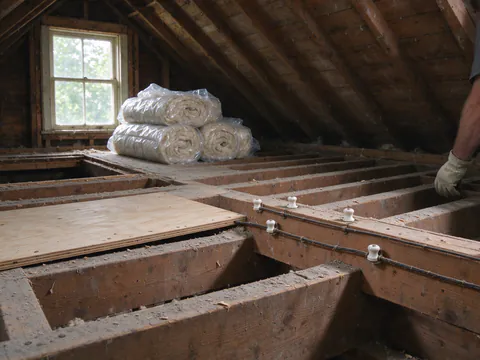
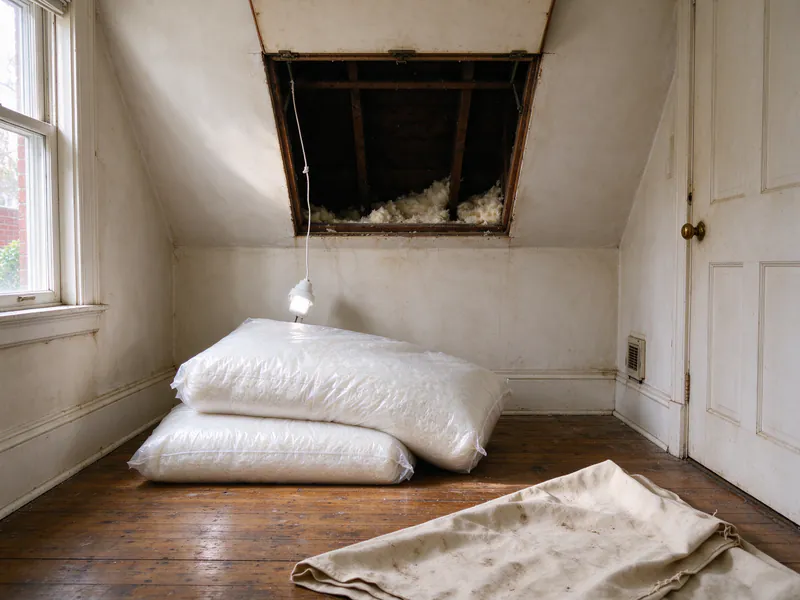
Mass Save’s assessment standards make knob and tube a barrier: if an assessor finds any evidence of it, no insulation goes in until a licensed electrician deals with the wiring (why insulation and old wiring conflict). Because the program wants that insulation installed, it helps pay to clear the way. That is why almost every dollar of help here starts with an energy assessment and ends with insulation going in.
The Mass Save enhanced barrier incentive
This is the closest thing to a grant: money that doesn’t have to be repaid, paid toward the removal itself.
Who qualifies
- A one- to four-unit home.
- A household income in Mass Save’s moderate-income band, verified through the program. Mass Save publishes the limits by household size and zip code, and updates them each heating season.
- A Home Energy Assessment that recommended insulation or air sealing that the knob and tube prevents.
How the money moves
- The assessment identifies the wiring as a barrier.
- A licensed electrician provides a signed proposal to remove the knob and tube to the extent needed for the approved weatherization.
- After income verification, Mass Save issues the incentive before the removal, as two checks: one to the customer and one to the contractor.
- The electrician does the work, signs the completion form and supplies the paid invoice.
- The recommended weatherization is completed.
The phrase that limits it
“To the extent necessary” is the key wording. The incentive is sized to what the approved insulation needs, which may be the attic and certain walls rather than every circuit. If you want the whole house rewired, the remainder is a separate budget (partial versus full replacement).
The HEAT Loan
The HEAT Loan isn’t a grant, but it removes interest from the equation. Mass Save sponsors offer it through participating lenders.
| Term | What applies |
|---|---|
| Rate | 0% |
| Ceiling | $25,000 in total over the customer’s lifetime, effective January 1, 2025 |
| What it covers | Weatherization and pre-weatherization barriers, including knob and tube; the panel upgrade cost guide covers loans that reach service work |
| Required first | A Home Energy Assessment, and completion of the recommended air sealing or insulation |
| Who can apply | The homeowner, with a residential electric or gas account from a Mass Save sponsor |
| Paperwork | A signed proposal on the contractor’s letterhead; work by a licensed contractor, not do-it-yourself |
| Terms | Two years for small amounts, up to seven years for larger ones |
Program guides have also set a separate limit on how much of the total can go to barriers, so ask the lender what applies when you apply.
Households with lower incomes
Households at or below 60% of state median income use Mass Save’s Income Eligible program, which provides the assessment and weatherization at no cost through program-managed contractors. Its page doesn’t name knob and tube, but the state Department of Energy Resources has said Mass Save provides knob and tube removal incentives for low- and moderate-income customers who are insulating. Ask how barrier work is handled before any private contract is signed.
In Designated Equity Communities, identified by zip code, Mass Save offers weatherization at no cost without income verification, and rental properties there can receive up to 100% off health and safety barrier remediation.
City and state loans that can cover the work
These aren’t tied to insulation, which makes them useful when the goal is the wiring itself.
| Program | Terms | Eligibility |
|---|---|---|
| Boston Home Center Home Repair and Improvement Loan | Deferred, 0%, up to $50,000, no monthly payments; due on sale, transfer or refinance | Boston owner-occupants of one- to four-family homes, or condos in associations of six or fewer units; income up to 135% of area median, with a 1:1 cost share from 120% to 135%; assets under $100,000, with seniors 60 and over exempt |
| Boston HomeWorks Green Loan | Interest-free loans for energy-saving repairs | Boston homeowners up to 135% of area median income who have had a Mass Save assessment |
| Boston Small Home Repairs for Seniors | Up to $2,000 of repairs at no cost; quick electrical fixes, not a rewire | Owner-occupants 62 and older with income up to 80% of area median |
| MassHousing Home Improvement Loan Program | Fixed-rate loans from $7,500 to $50,000, including safety improvements | Household income up to $139,000 |
| Somerville Home Improvement Program | 0% deferred loans, due on sale, transfer or cash-out refinance | Somerville owner-occupied or investor-owned buildings of up to seven units where a majority of units are income-eligible; lead-paint compliance required |
| Cambridge Home Improvement Program | Low- or no-interest rehab financing with technical help | Income-eligible Cambridge owners of one- to four-family homes |
How the Boston loan handles contractors
For owners 60 and over at or below 80% of area median income, the Boston Home Center uses its own contractor team. Between 80% and 135%, the homeowner hires an independent contractor and a Home Center construction specialist oversees the job.
Belmont works differently
Belmont buys electricity from Belmont Light, a municipal utility, not a Mass Save electric sponsor. Belmont homes heated with National Grid gas apply to Mass Save for insulation help and can use the HEAT Loan. Homes heated with oil or electricity use Belmont Light’s own weatherization incentive, which covers 75% of cost up to $500 for air sealing and $1,500 for insulation per year, after an assessment through Energy New England. Whether that path treats knob and tube as a barrier isn’t published, so ask Belmont Light.
What isn’t available
- A market-rate Mass Save incentive. The Department of Energy Resources describes the knob and tube incentives as being for low- and moderate-income households; market-rate homes can still use the HEAT Loan.
- The federal 25C credit. It never covered knob and tube itself, and it ended for improvements made after December 31, 2025.
- Door-to-door packages. Homeowners report sellers bundling “knob and tube removal” into financed roof or solar deals styled to look like Mass Save. Check with Mass Save directly before signing.
The order that protects your eligibility
- Book the Home Energy Assessment if you plan to use any Mass Save help.
- Apply to the Boston Home Center or other loan program before signing a contract.
- Have the wiring traced so the proposal names exactly what will be removed (how live wiring is verified).
- Sign with the electrician once approvals are in place, and let the permit be filed before work starts.
- Finish the insulation the assessment recommended.
The cost guide shows what the work itself typically costs, and the insulation barrier service describes the electrical side of a Mass Save job. When an assessment or loan application needs a licensed electrician’s signed proposal, Decker Boston Knob and Tube can arrange it: call (617) 405-3599 or start an estimate request.