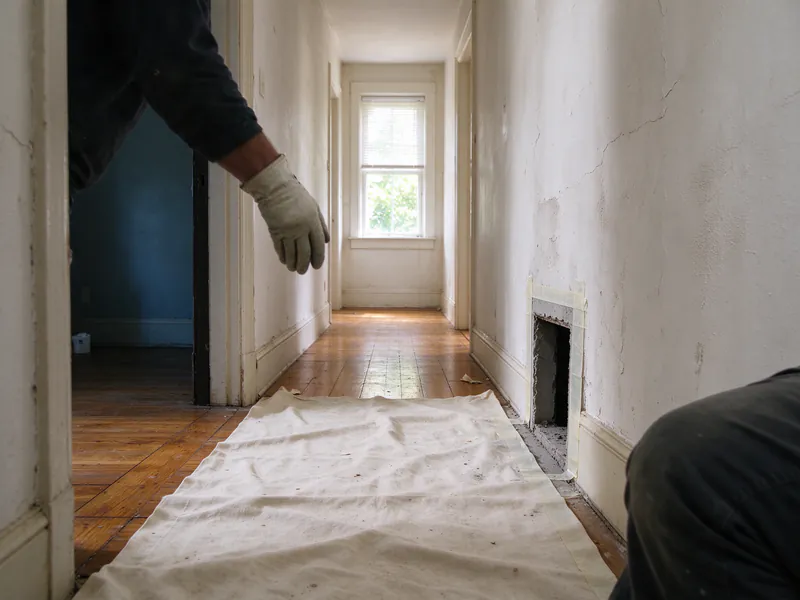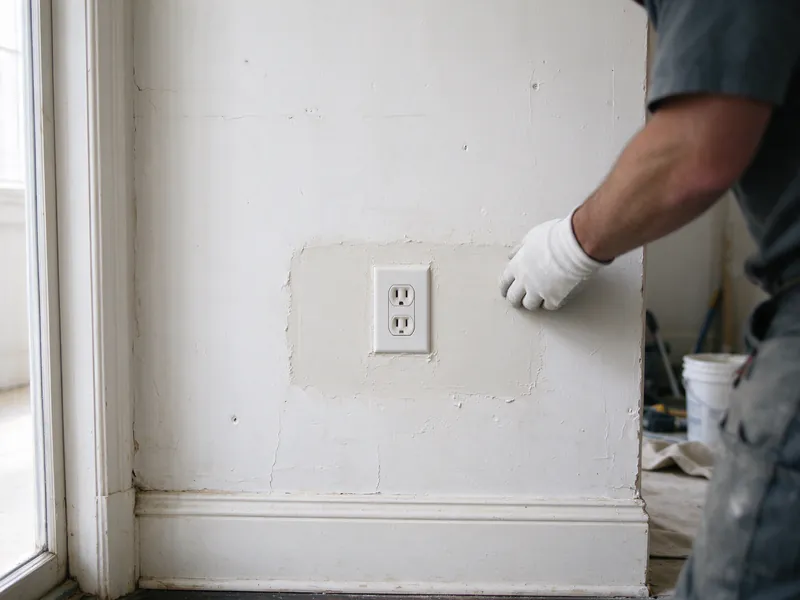
Decker Boston Knob and Tube arranges rewiring for plaster-walled houses across Boston, Cambridge, Somerville and nearby cities, carried out by licensed and insured electricians. Each new circuit still has to get from the panel to its outlet, but in a plaster-and-lath house it travels through finished walls that crack when cut carelessly and cost real money to restore.
So the access plan matters as much as the wiring. It decides how much plaster gets opened, who closes it, and whether the state’s lead-safe rules come into play. No public figure says how many Boston-area houses keep their original plaster, so treat age as a reason to plan for it, not proof. Census figures put 46.7% of Boston’s housing units before 1940.
What happens on the first visit
For a plaster house, the first visit maps routes as carefully as it maps circuits, because the routes set the patching bill.
Circuits first, then the ways through
The electrician starts at the panel and traces every circuit, then surveys the house for paths. Is the attic walkable or floored, and how deep is any insulation? Is the basement ceiling open, finished or dropped? Do closets stack from floor to floor, and is there an old chase beside the chimney or the plumbing stack? Each answer moves cable away from finished walls. Attic and crawl space access is one of the biggest drivers of the price.
The walls themselves
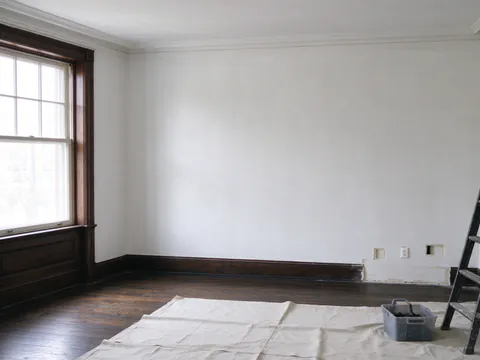
Before cutting, the existing cracks, loose patches and historic trim are noted, such as cornices, ceiling medallions and picture rails. That keeps the patching scope tied to the wall as it really was, and steers routes around finishes that are hard to match. The knob and tube inspection page covers the circuit side of the same visit.
Plaster versus drywall
Drywall is a sheet screwed to studs. Cut a hole and you patch it with a piece of the same sheet. Plaster on wood lath is a different material, and it changes every cut.
How plaster holds on
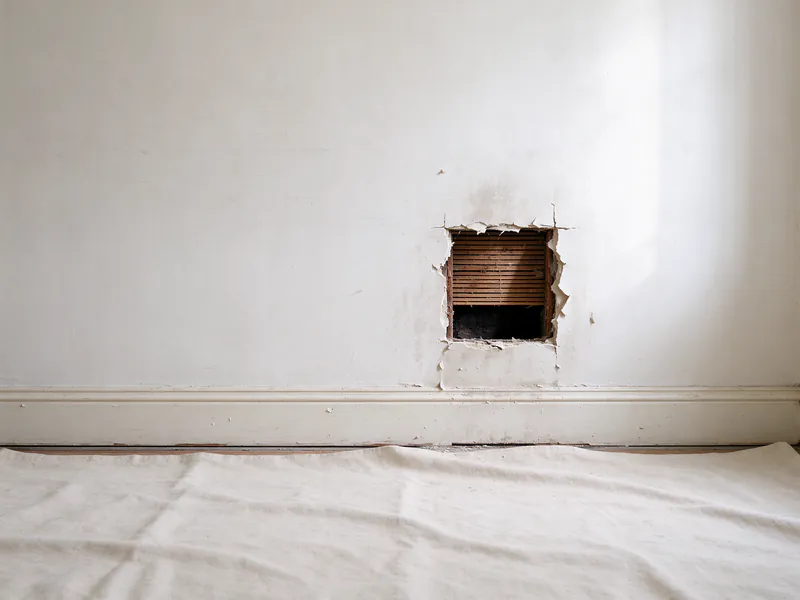
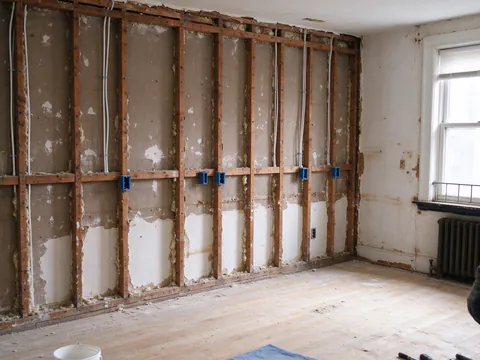
Plaster was troweled wet onto narrow wood strips with gaps between them. It squeezed through the gaps and hardened into keys that lock it to the lath. Cut it with a vibrating or dull blade and the keys around the opening break, so a neat hole grows a crack or a loose, sagging patch. That’s why cutting technique, a sharp blade and support around the opening matter more here than in a drywall house.
What it changes on the job
| Drywall house | Plaster-and-lath house | |
|---|---|---|
| Cutting an opening | Clean, quick, predictable | Brittle; the surrounding keys have to be protected |
| Fishing inside the cavity | A clear bay between studs | Lath edges and plaster blobs snag the fish tape |
| Patching | A drywall piece and joint compound | Fill to the lath, then layers built up to match the wall’s thickness |
| Matching the finish | Usually flat paint | Smooth hard finish, sometimes cornices or textured coats |
| Dust and paint | Gypsum dust | Plaster and lath dust, and lead in older paint layers |
Getting cable through without opening walls
Most of the route runs through spaces that already exist. The Massachusetts text of section 334.17 allows cable to be fished between access points in finished buildings where strapping it to framing is impracticable, and that clause is the legal footing for a rewire that keeps the plaster.
Vertical paths
Top-floor circuits drop from the attic through the top plate into a wall bay; first-floor circuits come up from the basement through the bottom plate. Where a house is balloon framed, the stud bays can run open from sill to attic, though fire blocking added later can stop them partway. Stacked closets and old chases carry runs between floors without touching a finished room.
Horizontal paths
Running across a wall is harder than running up it. The usual answers are lifting a baseboard and running cable behind it, going down to the basement and back up, or following the gap behind ceiling strapping, which the state code treats as support when cable runs diagonally behind strips of about three-quarters of an inch and isn’t pulled taut.
Where a cut is the better trade
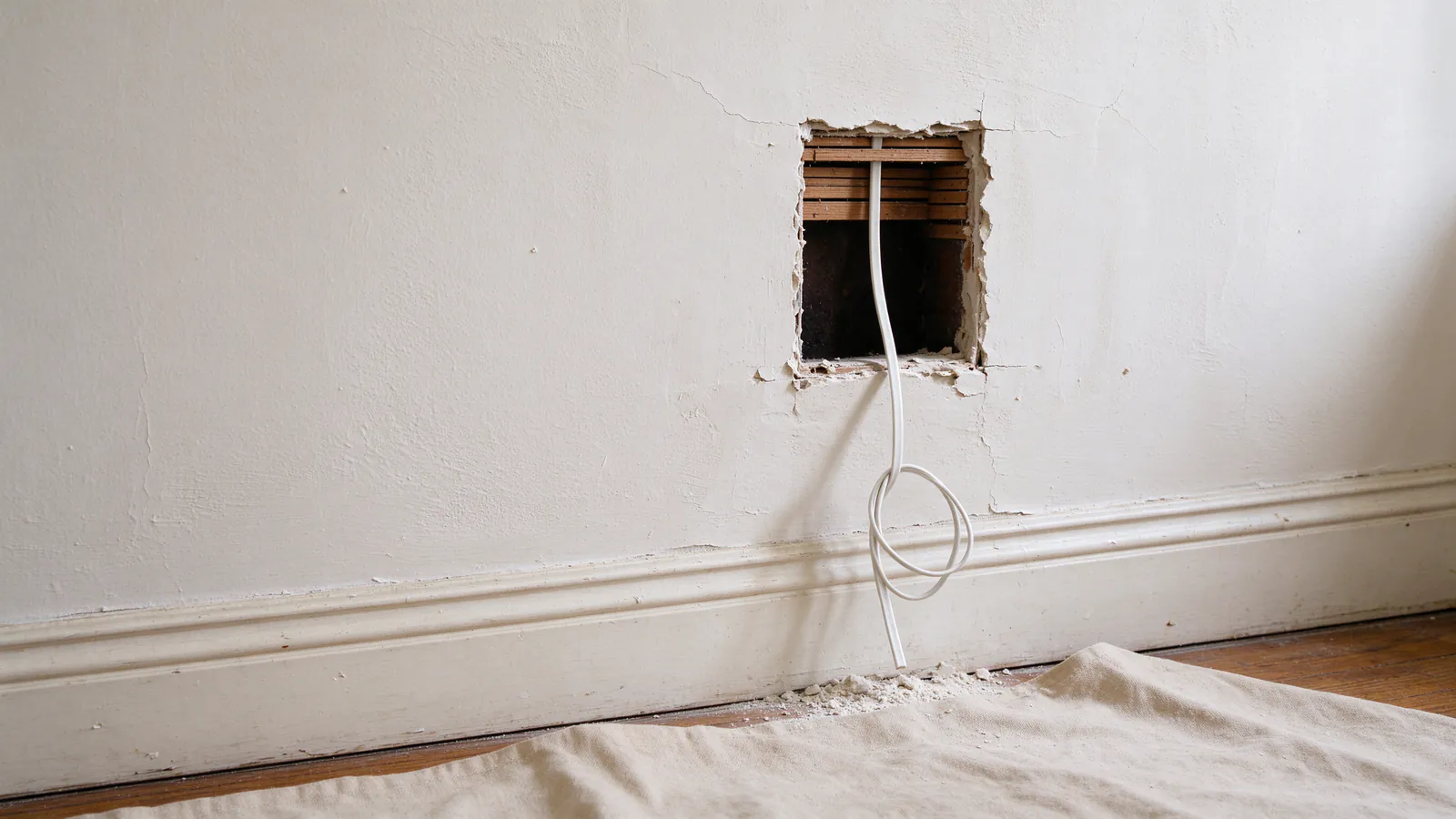
Where a header, a fire block or a floored attic stops the fish tape, a small access cut at that one point usually beats forcing the fish tape and cracking the wall. Homeowners report that electricians who can fish a replacement without leaving large, jagged holes can be hard to find, so ask each bidder for the route plan. The quote comparison guide lists what to check.
Ask for the route plan, not only the price
Two quotes for the same plaster house can open very different amounts of wall. The plan shows which.
When more of the wall has to open
Fishing has limits, and the honest plan says where they are rather than promising no openings.
Blocked cavities and taller buildings
Cavities packed with old insulation, framing changes from past remodels, and long horizontal runs can all make a short opening the faster and cleaner choice. Above three stories, NM cable circuits generally have to stay on the floor or unit they serve, which calls for other wiring methods in the taller masonry rowhouses covered on the Back Bay, Beacon Hill and South End page. In a triple-decker, each floor is usually routed as its own unit.
Using a remodel
If a kitchen or bath is being opened anyway, that’s the moment to run new circuits through open framing, and to follow old runs out of the remodeled rooms while access is easy. The remodel rewiring page covers the sequence with a general contractor.
Openings, inspection and restoration
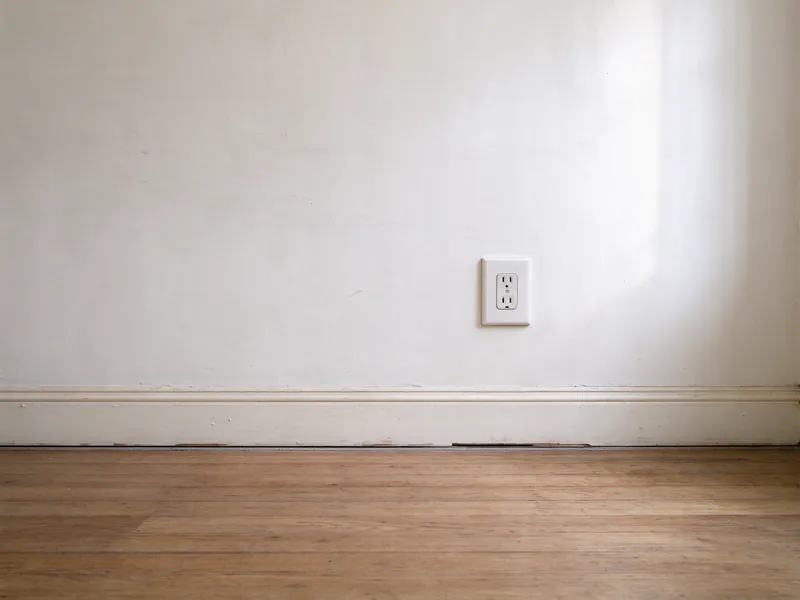
Every access cut is a future patch. The restoration plan belongs in the quote as its own line, not folded into the electrical price.
Inspection before anything closes
Under Rule 10 of 527 CMR 12.00, the inspector of wires has up to 72 hours after notice, not counting weekends and holidays, to see new wiring, and nothing may cover it before then. Openings stay open until then, so patching is scheduled after the rough-in inspection, never before.
Who patches, and to what finish
There are three common arrangements: the electrical contractor closes the openings, you hire a plasterer, or you patch before painting yourself. Whichever you choose, the quote should state the finish, whether rough-filled, ready for paint or painted. Where there is decorative plaster, a plasterer is often the better fit for that part.
Lead paint and historic finishes
In a house built before 1978, the Department of Labor Standards treats disturbing more than six square feet of painted surface per room, without lead testing, as renovation work for a licensed lead-safe renovation contractor. Small fishing holes can stay under that line; strips of opened wall usually can’t. The asbestos and lead paint guide covers both. Boston’s historic district commissions review exterior work, not interior wiring, so the inside concern is protecting original plaster and trim; the historic district guide explains what is reviewed.
What a plaster rewire costs
Plaster raises the price mainly through access and restoration, not the electrical work. A whole house rewire of the active circuits falls in a typical Boston-area budgeting range of $8,000 to $25,000 or more, and plaster-heavy jobs can run well past it. Patching is usually priced separately and depends on the number of openings, the finish, lead-safe practice and any historic trim. The Boston cost guide breaks a price into its parts, the cost estimator gives a range without a phone call, and the living at home guide covers dust and the practical side.