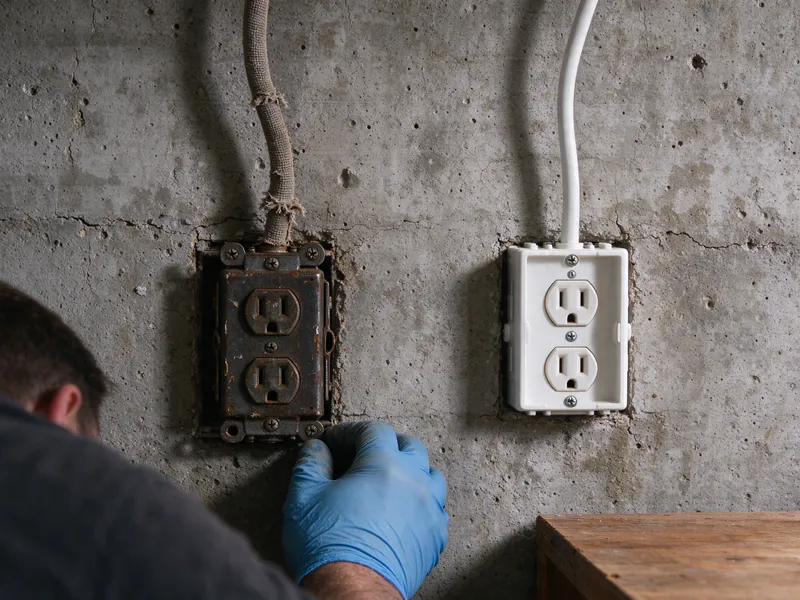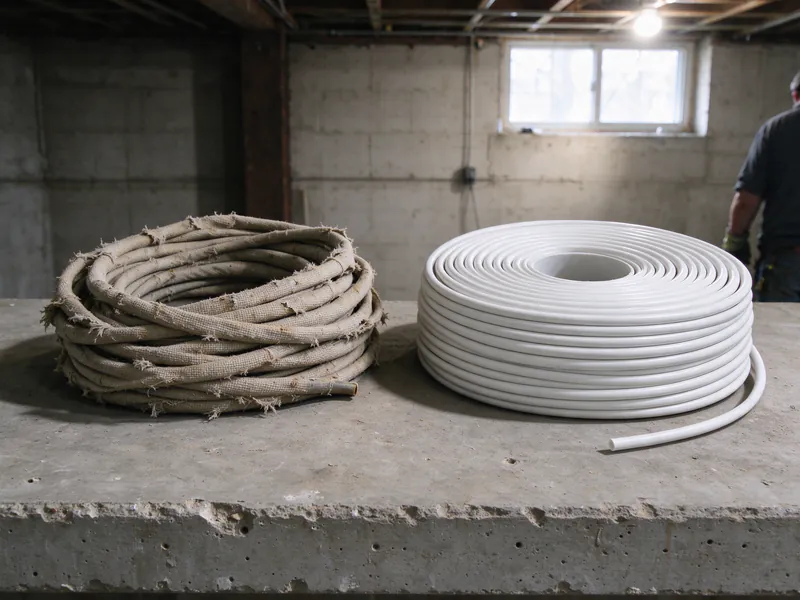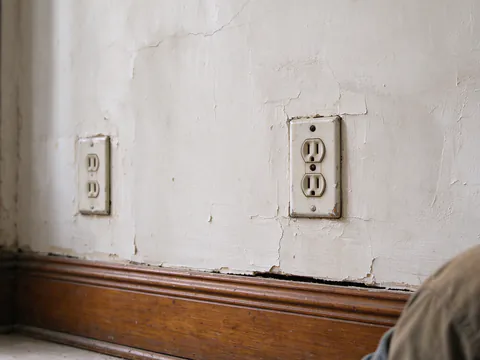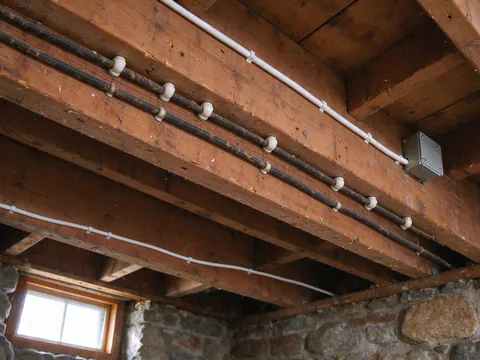
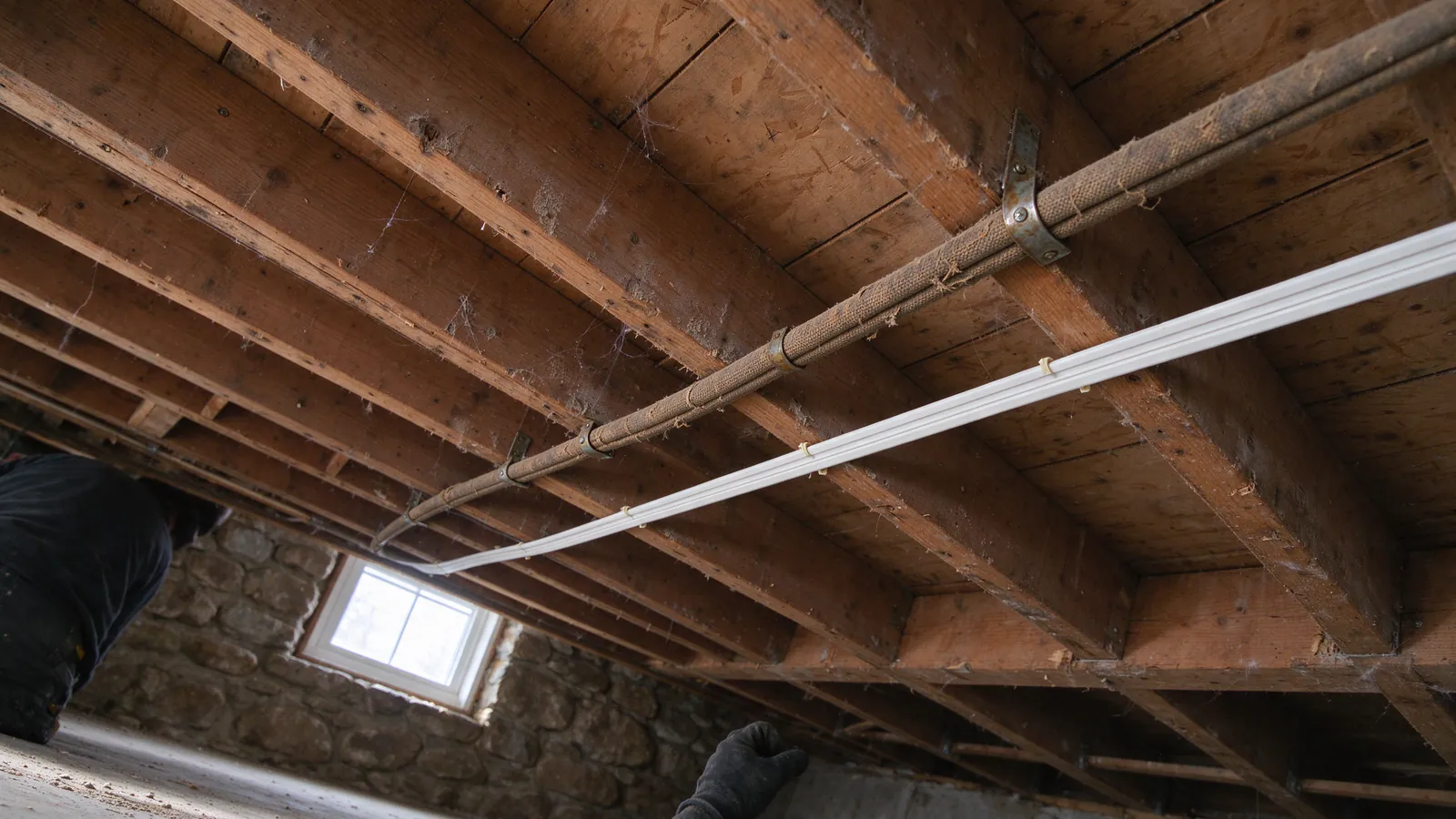
Decker Boston Knob and Tube arranges cloth wiring replacement across Boston, Cambridge, Somerville and nearby cities, carried out by licensed and insured electricians. Cloth wiring here means cable whose conductors are insulated with rubber and wrapped in woven fabric, usually two wires bundled in a cloth jacket and stapled to the framing, from the decades after knob and tube.
It is judged run by run on condition. Some of it needs replacing now, some can wait for a planned project, and in an older house it may sit alongside knob and tube and early armored cable. When most of the house is old wiring of one kind or another, a whole house rewire replaces every type in one pass.
What happens on the first visit
The first visit finds out where the cloth cable is, what it connects to and what shape it is in. Those are three separate questions, and the answers differ from room to room.
Where it is and what it joins
The electrician traces each circuit from the panel and records what it is made of. Cloth-sheathed cable may be spliced onto knob and tube where a mid-century owner extended a circuit, or onto later cable where a remodel stopped. Each junction is a potential weak point and a scope boundary, and the guide to knob and tube mixed with newer cable explains why they matter.
What condition it’s in
Then comes condition, read where the cable can be seen without disturbing it: in the basement and attic, at the panel and at a sample of boxes. Where condition is in doubt, a de-energized circuit can be tested with an insulation resistance tester. Closed walls hide the middle of each run, and the written findings say which runs were seen, which were tested and which could only be inferred.
What you get back
You get a priority list. Runs with brittle insulation, damage or risky splices go first; intact runs that feed rooms due for renovation can be folded into that work; the rest are recorded. The knob and tube vs cloth wiring guide shows how the two types are told apart.
How rubber and cloth insulation fails
The conductor inside is usually fine. The insulation around it is what ages, and it ages fastest where it is hot, bent or disturbed.
Heat hardens the rubber
Rubber insulation stays flexible only as long as it isn’t cooked. Decades of heat from light fixtures, a hot attic in summer, or an overloaded circuit harden it, and hardened rubber cracks when it is moved. The cloth over it was there for abrasion, not insulation, and it frays and sheds once the rubber under it is gone.
Bends and terminations take the stress
The tightest bends are where the cable enters a box and where the conductors wrap around device screws. Every outlet swap or fixture change flexes those few inches again. Damage tends to show there first, and an exposed bare conductor inside a box is how a working circuit turns into an arcing one.
Later work and insulation over it
Cable stapled to framing was moved and nicked by every later trade that worked nearby. Where blown-in insulation was later packed around it, the cable has less ability to shed heat. The Massachusetts text of the code rates new cable run through thermal insulation at its 60°C value, a sign of how much insulation changes the heat picture even for modern wire.
Early armored cable and the ground question
Houses with cloth cable may also have early armored cable, often called BX, from the same period. Its conductors are the same rubber-and-cloth type, inside a spiral metal jacket.
Why the jacket matters
On circuits with no ground wire, that metal jacket was sometimes the only path for fault current back to the panel. The path depends on every joint and box connector staying tight, and old armor can be rusted, loose or broken along its length. Sharp jacket ends at boxes can also cut into the insulation they were supposed to protect.
How it is handled
The electrician tests whether the jacket carries fault current at each box before treating the circuit as grounded. Where it can’t be shown to, the circuit is treated as ungrounded, and the ungrounded outlet upgrade page covers the choices for it. Where cloth cable and old armored cable share a circuit, the scope normally replaces both, so the circuit ends up on one kind of wire.
Cloth cable, BX and knob and tube in one house?
Start with a circuit-by-circuit map. It shows what to replace first and what can wait.
What replacement involves
Cloth-sheathed cable was installed like modern cable, along the framing and into boxes, so its routes are often reusable.
Following the old routes
Where the old cable ran through bored joists and straight into boxes, new grounded cable can often take the same path, entering through the same box openings. That keeps the number of new openings down compared with knob and tube, which took separate routes for each wire. Where a run can’t be followed, the Massachusetts text allows new cable to be fished between access points in finished buildings, and the plaster wall rewiring page covers how openings are cut and closed.
Boxes, devices and protection
Old boxes are often too shallow to hold a grounded device and its wires without crowding, so they are replaced where needed. Every new 120 volt branch circuit gets arc-fault protection, which Massachusetts requires throughout a dwelling, and receptacles near sinks get ground-fault protection. That can mean panel spaces the house doesn’t have, which the fuse box and panel upgrade page covers.
Old wire left in walls
Cloth cable sealed inside finished plaster is usually disconnected at both ends, confirmed dead and left in place, while runs in the attic and basement are pulled out. In a house built before 1978, opening more than six square feet of painted surface in a room makes the job lead-safe renovation work under the state’s Department of Labor Standards rules. The asbestos and lead paint guide covers both materials.
Insurance, Mass Save and price
Cloth cable is not knob and tube, and the difference can matter for both programs and insurers.
Mass Save and insurers
Mass Save’s assessment standards name knob and tube as the barrier to insulation, so correctly identifying a run as cloth-sheathed cable can change what an energy assessment allows. Insurers use the terms loosely; ask for a request in writing that says which wiring types it covers, then check the scope against it. The Massachusetts insurance guide explains what to ask.
Code and price
Massachusetts doesn’t require old wiring to be replaced because new work is added. Rule 3 of 527 CMR 12.00 lets an installation be modified without bringing the rest of it up to code, as long as the work creates or worsens no violation. Replacement is a decision about condition and plans. The signs guide covers which symptoms call for a prompt look, and the cost estimator gives a starting range without a phone call.