
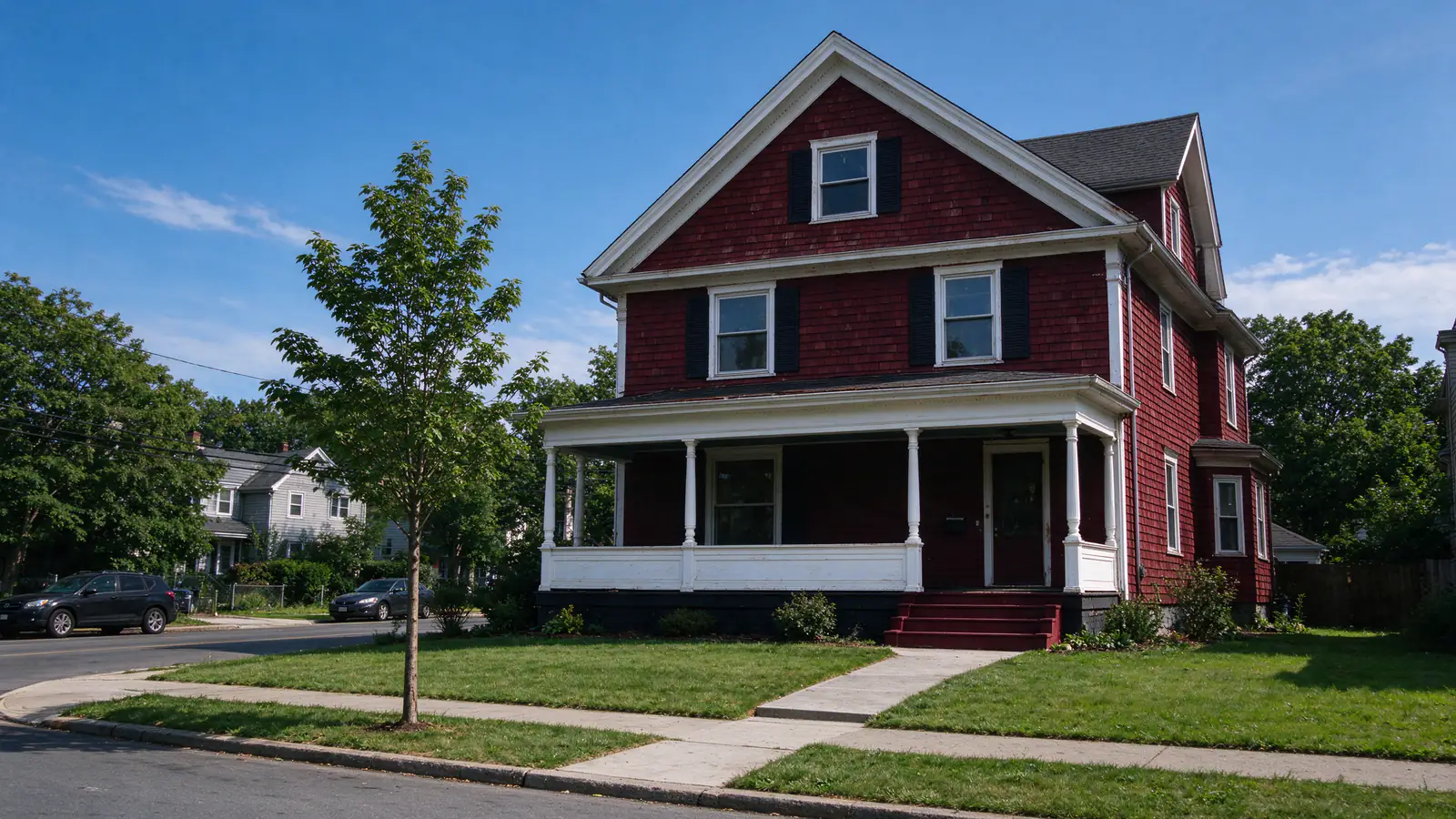
Boston’s permit records name knob and tube more often in Jamaica Plain, Roslindale and West Roxbury than anywhere else in the city. Of the 79 electrical permits since 2010 whose descriptions mention it, 50 are in these three neighborhoods, against 10 in Dorchester. Decker Boston Knob and Tube arranges knob and tube replacement across all three and in Hyde Park, from Pondside and Forest Hills to Roslindale Village and West Roxbury Centre, carried out by licensed and insured electrical contractors.
In many of these houses the question isn’t whether to rewire. It’s how much old wiring is left after earlier updates, and how to reach it. That starts with a knob and tube inspection that traces each circuit back to the panel.
What the permit records say about these houses
The permits read like finishing work: owners replacing the knob and tube that earlier remodels left behind, rather than gutting whole houses.
A 2018 Roslindale permit reads “Remove knob and tube and replace with Romex for all light fixtures and devices.” A 2019 West Roxbury permit covers “outlets & lighting currently served by Knob & Tube wiring,” and a 2018 Jamaica Plain job paired a 200 amp service upgrade with rewiring the “knob & tube locations.” Citywide, 25 of the 79 permits also mention a service or panel. The city’s open dataset seems to be missing many recent permits, so these counts are a floor, not a measure.
Detached houses and two-families
The housing explains part of it. Census figures put 59.3% of West Roxbury’s housing units (02132) in detached houses, the highest share in Boston, against 11.9% citywide. Roslindale’s 02131 is 54.2% pre-1940, with 33.5% of units detached and 21.0% in two-unit buildings. Jamaica Plain’s 02130 is 57.7% pre-1940 but mixed, with a third of its units in three- and four-unit buildings, where the job looks more like a triple-decker rewire.
Finishing a house that was rewired in pieces
Where most rooms already run on newer cable, the job is to find and replace what remains. Where the old system still feeds most of the house, one full rewire usually costs less than several partial ones spread over the years.
Finding the boundary
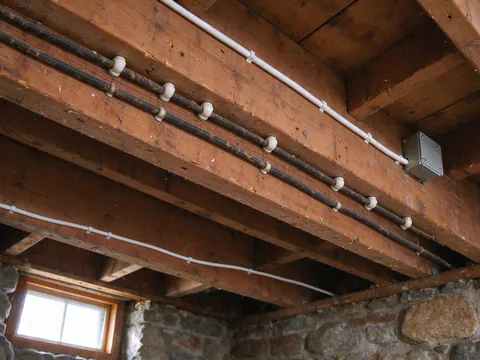
A partly updated house is a mixed system. Newer cable often feeds the kitchen and bath while a bedroom, the hall lights or a porch circuit still run on porcelain, sometimes spliced into newer cable inside a wall or ceiling. Tracing finds each of those joints, so a partial replacement ends at a known point rather than a guess. The guide to knob and tube mixed with newer cable explains why those splices matter.
When finishing becomes a full rewire
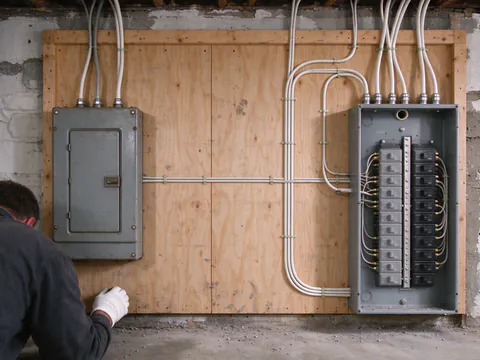
The case for a whole house rewire grows when tracing finds several wiring eras, buried splices, or a panel with no room for the arc-fault breakers new circuits need. Massachusetts doesn’t force the decision: Rule 3 of 527 CMR 12.00 lets new work be added without bringing the rest of an installation up to code. The partial vs full guide compares the two.
Reaching the leftover runs without opening every wall
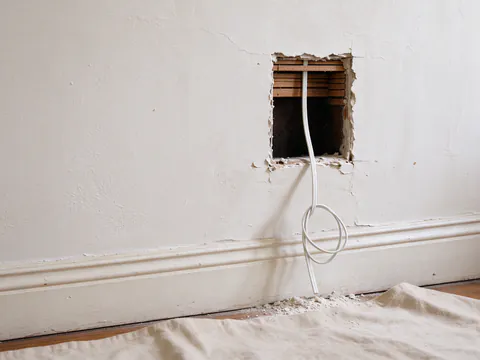
Patching follows access. Where open framing sits above or below a leftover circuit, new cable can reach it through the joists instead of through the plaster.
From above
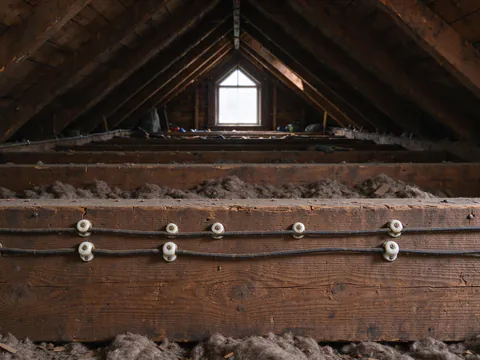
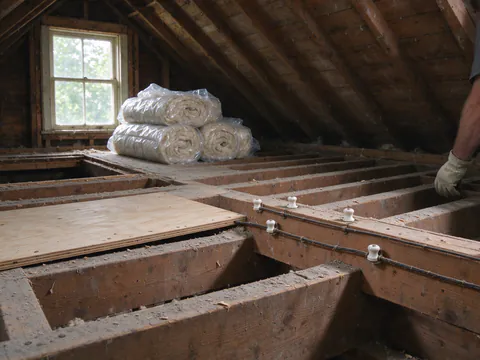
A walkable attic lets top-floor circuits cross the joists and drop into wall cavities. Blown-in insulation over old runs complicates that: Mass Save’s assessment standards bar insulating over any active knob and tube, so an insulated attic is first a question of which runs are live. Where the attic is floored or finished, routes shift to closets and small ceiling openings.
From below
An unfinished basement ceiling lets first-floor circuits come up from below. The middle floor of a two-story house is the hard part, because nothing open sits directly above or below it. The Massachusetts code lets cable be fished between access points in finished buildings where strapping it is impracticable, and that is what keeps those openings small.
Openings and lead-safe rules
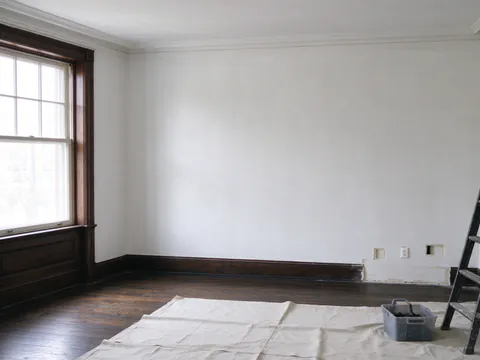
In a house built before 1978, opening more than six square feet of painted surface per room makes the job lead-safe renovation work under Department of Labor Standards rules. Small fishing holes can stay under that line. The plaster wall rewiring page covers how openings are cut and closed.
From the first visit to closed walls
The order is the same in most houses here, though the access plan changes with each one.
- The first visit starts at the panel, traces every circuit to the rooms it feeds, and checks the attic and basement routes.
- The written scope lists each new circuit, each old run to be disconnected, the openings the routes need, whether the panel stays, and patching as its own line.
- The licensed electrician pulls the Boston permit. ISD warns that starting before the permit is issued can mean double the permit cost or a code violation.
- The rewire goes area by area, with planned power-off windows that keep the boiler or furnace controls powered.
- The rough-in inspection comes before any wall closes. Massachusetts gives the inspector up to 72 hours after notice, weekends and holidays excluded.
- The old circuits are disconnected and tested, reachable attic and basement runs come out, and the walls are closed.
- The finish is a final inspection, a labeled panel schedule and a written summary stating that no knob and tube remains in service.
The living at home guide covers the working days themselves.
Finishing a partly rewired house?
Start with which circuits still run on the old wiring and how the attic and basement reach them.
From Jamaica Pond to the VFW Parkway
The three neighborhoods share a permit office and a utility, but the houses change as you move south and west from Jamaica Pond.
Around Jamaica Pond, Pondside and Jamaica Hills, and up Centre Street toward the Arnold Arboretum, the old housing mixes single-family houses with two- and three-family buildings. A Jamaica Plain job can be a single attic-to-basement rewire or one unit in a stacked building, and the first visit settles which it is before anything is priced.
Past Forest Hills, where the Orange Line ends, Roslindale Village and Bellevue Hill shift toward detached houses and two-families. West Roxbury, along the Needham Line, Centre Street and the VFW Parkway, is the most single-family part of Boston, so the work there is usually one household’s house, staged around one family’s routine.
Winter changes the schedule more than the scope. Boston averages 91.6 days a year with a low at or below freezing (NOAA), so power-off windows are planned around the heating system, and attic work runs in the cold. A Mass Save assessment that finds old wiring can also push the electrical work into fall, because insulation has to wait for it.
Permit fees, Eversource and paying for the work
All four neighborhoods sit under the Boston Inspectional Services Department, and a homeowner must hire a licensed contractor to apply. With no change in service, ISD charges $20 plus $1 per fixture, plug or outlet and $5 per meter. The Boston permit guide explains the other cases.
A service upgrade adds an Eversource work request to the schedule. The panel and service upgrade page covers when that’s needed.
For money, three routes come up most. Mass Save’s barrier incentive pays up to $7,000 for moderate-income households in 1 to 4 unit homes when knob and tube blocks recommended insulation, and its HEAT Loan offers 0% financing after an assessment; the grants guide covers both. The Boston Home Center’s repair loan, described in the questions below, names knob and tube removal outright. The Boston cost guide shows what moves the price.
Hyde Park
Hyde Park shares Boston’s permit office and Eversource service, so it is covered here. Its housing is younger: 32.7% of units in 02136 date from before 1940, but 9.8% are from the 1940s, the highest share in the city, and 36.4% are detached.
That makes the first question less predictable. Around Cleary Square, Fairmount Hill and Readville, near the Fairmount Line and Route 138, a house from the 1940s may hold knob and tube, early cable or both. Only three Boston permits naming knob and tube came from Hyde Park, but 10 rewire permits did between November 2021 and October 2026, so tracing comes before any assumption.